The Ubikuti: an unprecedented species upends our understanding of life
Canadian researchers have identified a mammal with unprecedented biological properties in Limpopo Province, South Africa. Its unique capacity for tissue bioregeneration opens major prospects for medicine.
By Dr. Marc-Antoine Delorme, Dr. Nadia Okafor-Bhatt & Dr. James W. HarringtonPublishedAugust 14, 2025Read time 12 minDOI 10.1098/rspb.2025.0847
The Discovery
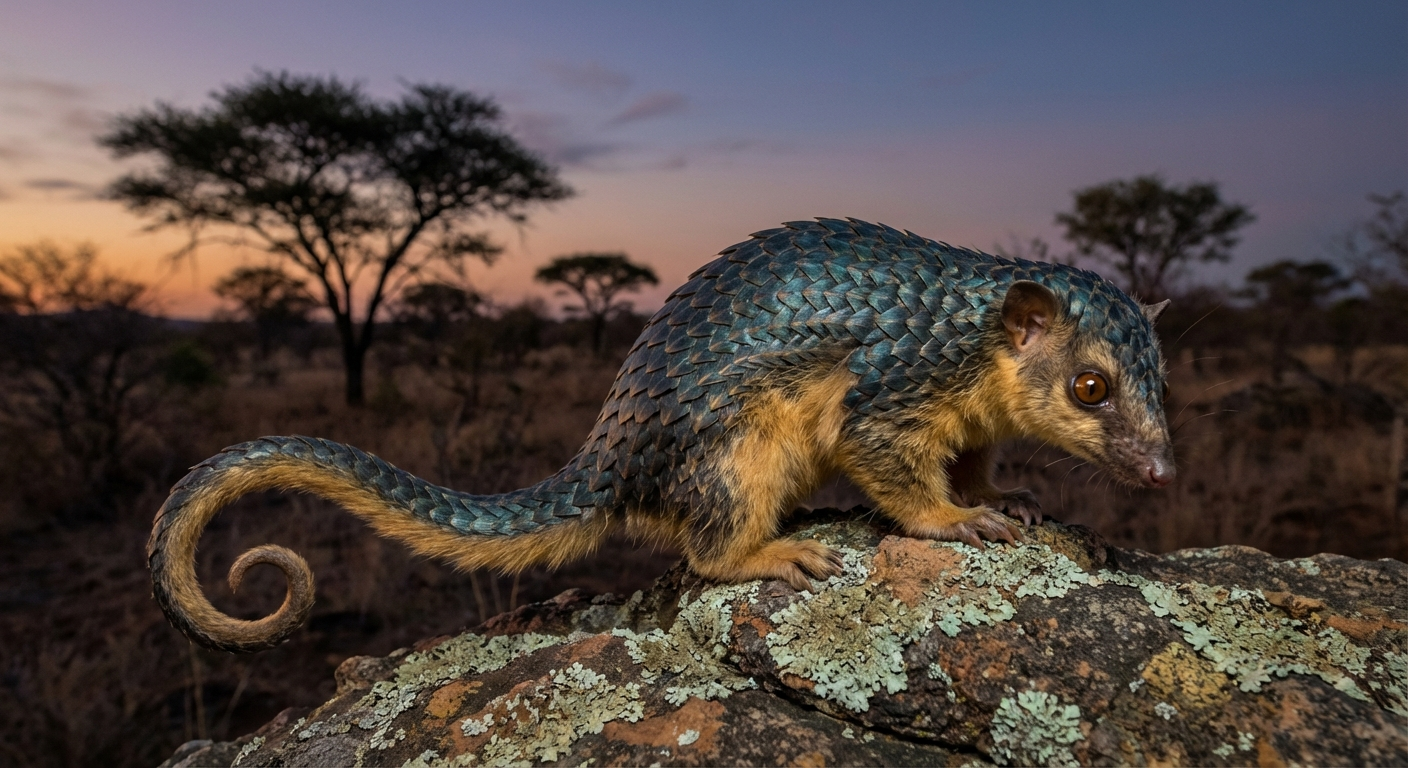
At dusk on July 28, 2025, in an isolated granitic kopje of the Soutpansberg range, the Canadian–South African research team observed for the first time a living specimen of Ubikutis africanus — a small mammal whose existence had never been documented.
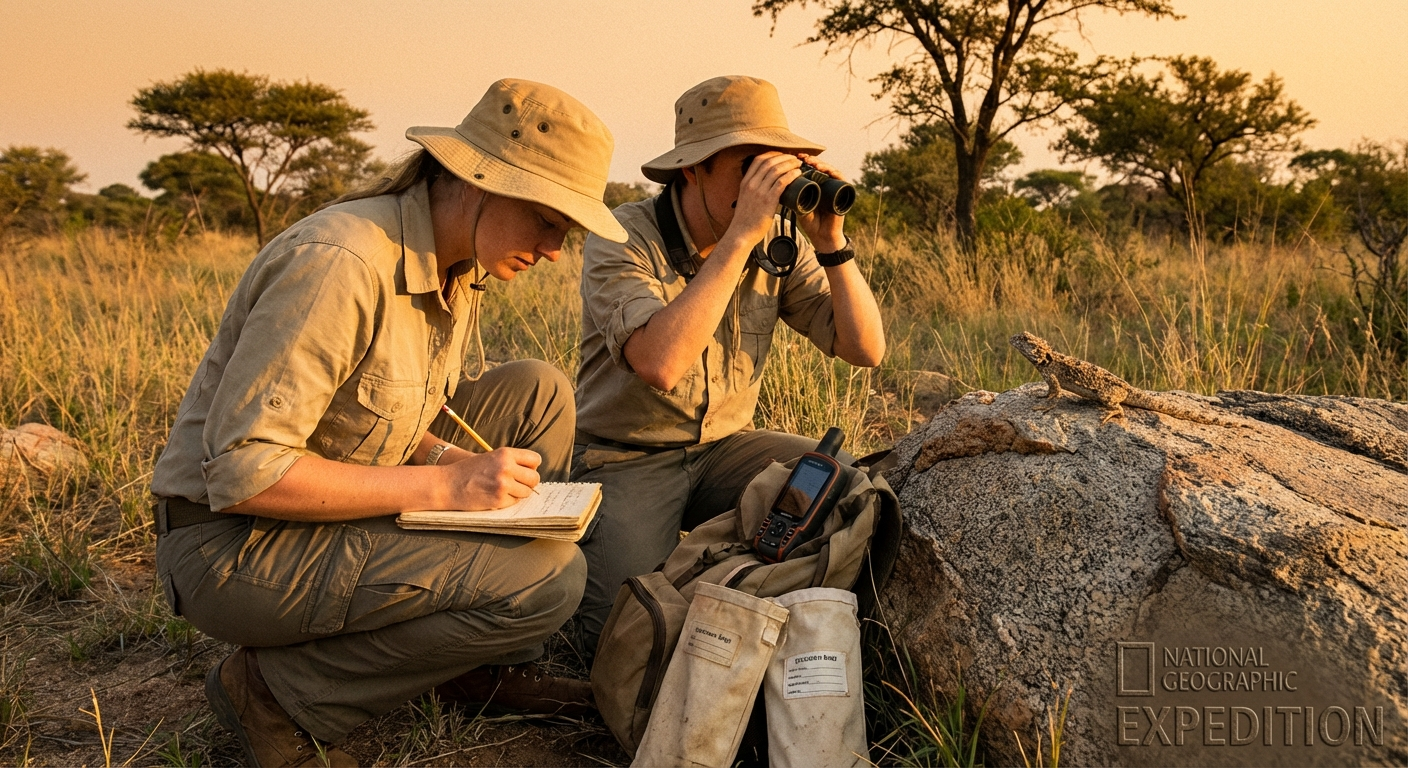
The expedition, funded by the Natural Sciences and Engineering Research Council of Canada (NSERC) and the South African National Biodiversity Institute (SANBI), was part of a five-year faunal inventory programme targeting ecotone zones in Limpopo Province. Led by Dr Marc-Antoine Delorme of the Université de Montréal, the nine-member team of researchers and technicians had been operating from the Mapungubwe base camp since July 14.
'We were retrieving camera traps set along a ridgeline at approximately 1,340 metres elevation when we spotted unusual movement among the rocks,' recalls Dr Delorme. 'The morphology didn't match anything known. Our first instinct was to think of a juvenile pangolin, but the proportions, the behaviour — everything was different.'
Two adult specimens and one juvenile were observed that night. Over the following days, the team identified a group of eleven individuals occupying a network of rock cavities, confirming the existence of an established population. Tissue samples (non-invasive skin biopsies), faeces, and secretions were collected for genetic analysis.
The preliminary DNA sequencing results, carried out at the Evolutionary Genomics Laboratory at McGill University, were unequivocal: Ubikutis africanus represents not only a new species, but an entirely new genus within the order Pholidota — the first since the description of the genus Phataginus by Rafinesque in 1821.
'In twenty-three years of fieldwork in southern Africa, I have never seen anything comparable. This is not simply a new species — it is an entire branch of the tree of life that we had not suspected.'
— Dr Nadia Okafor-Bhatt, Conservation Biologist, Dalhousie University
The Animal
Taxonomic classification
Kingdom
Animalia
Phylum
Chordata
Class
Mammalia
Order
Pholidota
Family
Ubikutidae fam. nov.
Genus
Ubikutis gen. nov.
Species
U. africanus sp. nov.
Common name
Ubikuti (from Tshivenda u-bi-khuthi, 'the one that hides in the stone')
IUCN Status
Under assessment (Data Deficient, DD)
Morphology
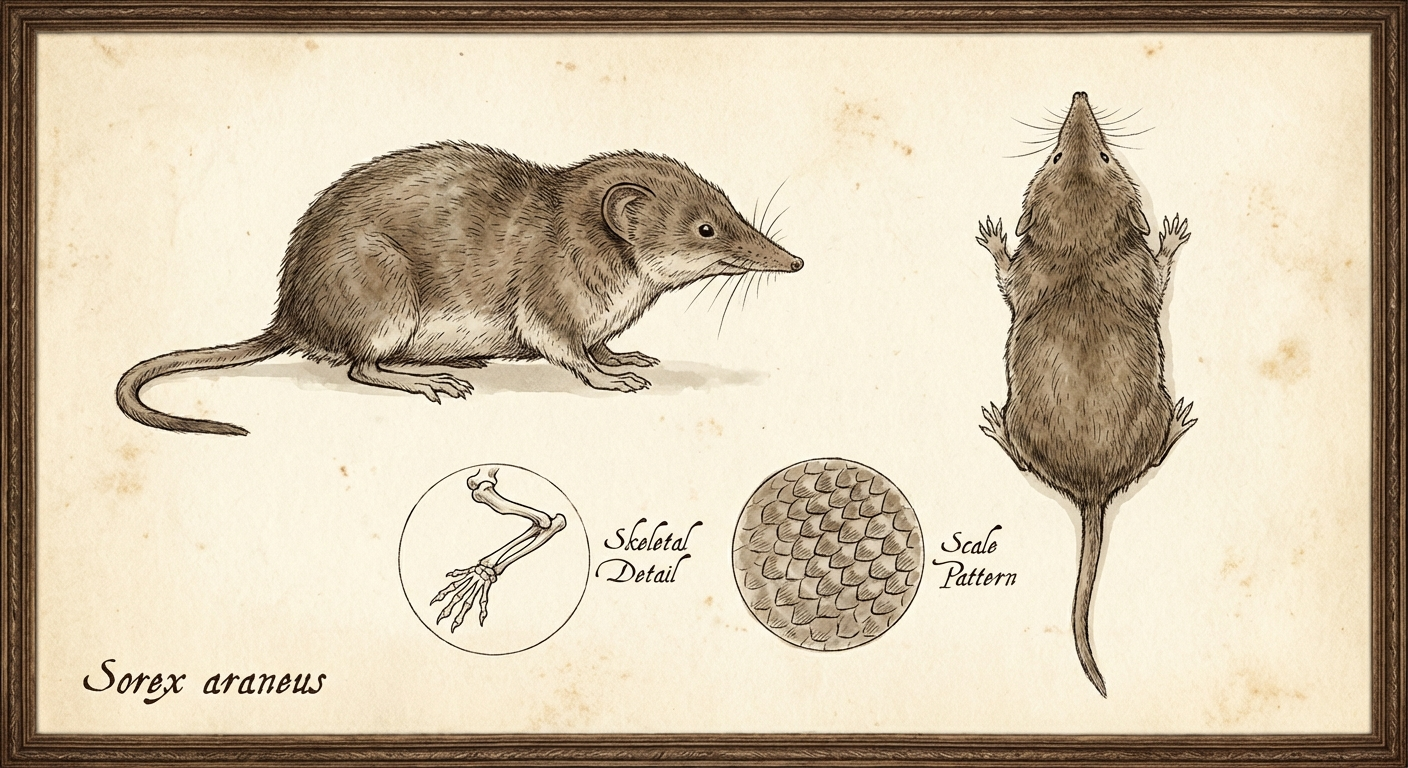
The Ubikuti is a modestly sized mammal: adults measure between 32 and 41 cm in total body length (including tail) and weigh 850 g to 1.3 kg. Its silhouette superficially recalls that of pangolins, to which it is phylogenetically related, but several features distinguish it radically.
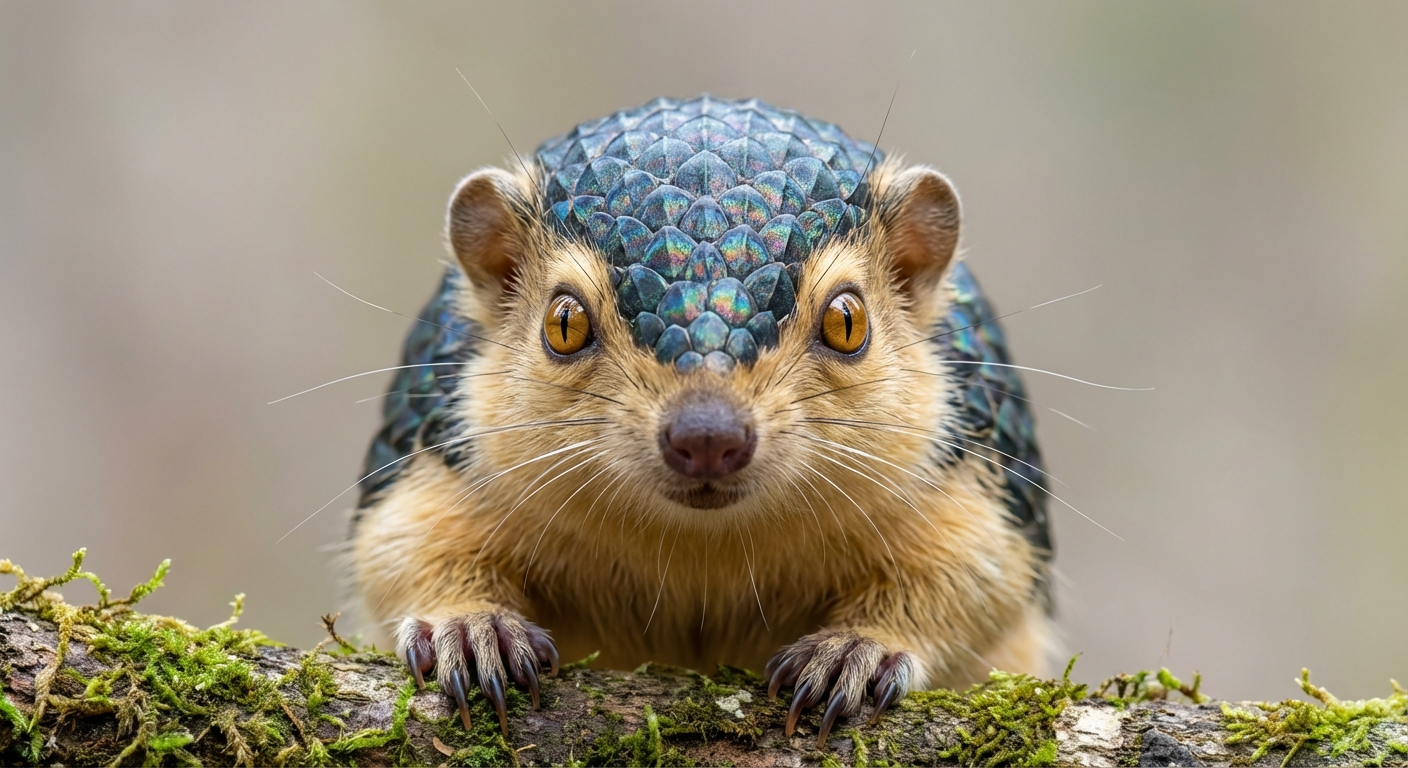
The dorsum and flanks are covered in imbricated keratinised scales of a dark blue-green hue with iridescent reflections — a structural colouration unique among mammals, produced by photonic nanostructures embedded in the keratin. The ventral surface, muzzle, and eye surrounds bear a fine, dense pelage ranging from tawny to golden. The eyes, remarkably large for an animal of this size (corneal diameter 14 mm), are amber-coloured with a vertical pupil, characteristic of an adaptation to nocturnal vision.
The prehensile tail, partially devoid of scales, is used for locomotion through rock crevices as well as for object manipulation. The forelimbs, proportionally more developed than in pangolins, terminate in five digits bearing curved semi-retractile claws — an adaptation to saxicolous life (rock-dwelling) unique within the Pholidota.
Habitat and behaviour
The Ubikuti is strictly nocturnal and saxicolous. The known population occupies a network of cavities and fissures in a granitic kopje of the Soutpansberg, between 1,200 and 1,400 m elevation. The microhabitat appears highly specific: north-east facing rock walls (optimal thermal exposure), the presence of seepage water, and mixed montane bushveld vegetation cover.
The species exhibits a matriarchal social structure, organised in groups of 6 to 14 individuals centred around 2 to 3 breeding females. Field observations suggest complex cooperative behaviours, including communal guarding of juveniles and low-frequency vocalisations (infrasound between 12 and 18 Hz) that may serve for long-distance communication through rock.
Diet
Faecal content analysis reveals an omnivorous, predominantly insectivorous diet. The Ubikuti feeds primarily on termites, beetles, and larvae, supplemented by Ficus spp. fruits, underground tubers, and occasionally small gastropods. The tongue, 12 to 15 cm in length, is coated with a viscous mucus whose chemical composition is currently being analysed.
Bioregeneration: a unique capacity
The most remarkable characteristic of the Ubikuti is undoubtedly its capacity for tissue regeneration. Initial observations showed that an individual injured during capture (superficial abrasion of 3 cm²) had entirely reconstituted its scales in under 72 hours — a healing rate 8 to 12 times faster than that of any known mammal.
Histological analysis of biopsies revealed the presence of pluripotent stem cells in the sub-squamal dermis, exhibiting gene expression markers never previously described. These cells, provisionally named 'U-cells', appear capable of differentiating into multiple tissue lineages — keratin, dermis, connective tissue — with unprecedented efficiency and speed in adult mammals.
'The U-cells of the Ubikuti simultaneously express transcription factors that were thought to be mutually exclusive in mammals. It is as though this animal has retained an embryonic regeneration programme that all other mammals lost over the course of evolution.'
— Dr James W. Harrington, Molecular Biologist, University of Toronto
Full professor in the Department of Biological Sciences at the Université de Montréal since 2014. Specialist in the systematics and ecology of Afrotropical mammals. He holds a Ph.D. from Université Laval (2007) and completed a postdoctoral fellowship at the Muséum national d'histoire naturelle in Paris. He has led 14 expeditions in sub-Saharan Africa and described 6 new mammal species. Member of the scientific committee of the Canadian Society of Zoology.
Notable publications: Delorme & Dupuis (2019), J. Mammalogy, 100(4); Delorme et al. (2022), Syst. Biol., 71(2); Delorme & Van Wyk (2024), Afr. J. Ecol., 62(1).
Dr. Nadia Okafor-Bhatt
Conservation Biology
Associate professor in the Department of Biology at Dalhousie University (Halifax). Expert in the conservation biology of threatened mammals of southern Africa. Ph.D. from the University of Pretoria (2011), postdoctoral research at the University of Cambridge. Her work focuses on pangolins and cryptic species of rocky ecosystems. Co-chair of the IUCN Pholidota Specialist Group. Author of more than 85 publications in peer-reviewed journals.
Professor in the Department of Cell and Molecular Biology at the University of Toronto. Specialist in comparative genomics and tissue regeneration mechanisms in vertebrates. Ph.D. from MIT (2009), Massey College fellow. His research on adult stem cells has been published in Nature, Cell, and Science. Recipient of the NSERC Steacie Prize (2021). He joined the expedition for in-field molecular analysis.
The discovery of U-cells opens a considerable field of research. Dr Harrington's team has already initiated a collaboration with the McEwen Centre for Regenerative Medicine (Toronto) to characterise the signalling pathways involved. Preliminary results, presented as an oral communication at the ISSCR (International Society for Stem Cell Research) congress in September 2025, suggest that U-cells secrete a novel cocktail of growth factors, provisionally named 'UBK-1 factor'.
If these factors can be synthesised or their mechanism of action replicated, the potential applications are immense: treatment of severe burns, post-surgical healing, articular cartilage repair, and even regeneration of complex tissues. Dr Harrington cautions, however, that 'we are at the very earliest stages. The road between a fundamental discovery and a clinical application is long — we must remain cautious in our projections.'
Evolution and biogeography
From a systematic standpoint, the Ubikuti challenges the phylogeny of the Pholidota. Molecular analyses place the divergence of the genus Ubikutis at approximately 42 million years ago (middle Eocene), well before the separation of lineages leading to extant pangolins. The species thus represents a phylogenetic 'living fossil', a remnant of an ancient diversity that was thought to have entirely vanished.
The structural colouration of the scales — a phenomenon well known in insects and birds but exceedingly rare in mammals — represents a remarkable example of convergent evolution. The study of its molecular basis, underway at the Biological Photonics Laboratory at McGill University, may also be of interest to materials science.
Conservation
The known population of U. africanus is estimated at 30–50 individuals, distributed across an area of less than 4 km². The species already meets the criteria for classification as 'Critically Endangered' (CR) under IUCN categories. A formal listing request was submitted in September 2025.
SANBI, in collaboration with SANParks and Limpopo Province, has established a temporary protection zone around the discovery site. The exact location remains confidential to prevent any risk of poaching or disturbance. A GPS telemetry monitoring programme is being prepared for the 2026 season.
Next steps
Oct. 2025
Publication of the formal description in Proceedings of the Royal Society B
Nov. 2025
Full genome sequencing (Illumina NovaSeq, 60× coverage)
Jan. 2026
Launch of GPS telemetry monitoring programme (15 individuals)
Mar. 2026
First in vitro characterisation of UBK-1 factor
2026–2027
Surveys in adjacent mountain ranges (Blouberg, Waterberg)
References
Delorme, M.-A., Okafor-Bhatt, N., Harrington, J.W., Van Wyk, E., Mokoena, T.S. & Tremblay, L. (2025). Ubikutis africanus, a new genus and species of Pholidota from the Soutpansberg, Limpopo Province, South Africa. Proceedings of the Royal Society B: Biological Sciences, 292(2058), 20250847. doi:10.1098/rspb.2025.0847
Okafor-Bhatt, N. & Pietersen, D.W. (2025). Conservation status assessment of the newly described Ubikutis africanus (Pholidota: Ubikutidae). Oryx, 59(4), in press.
Tremblay, L., Delorme, M.-A. & Nguyen, V.T. (2025). Molecular phylogenetics of the Pholidota: implications of the discovery of Ubikutis for pangolin systematics. Molecular Phylogenetics and Evolution, 192, 107962. doi:10.1016/j.ympev.2025.107962
Harrington, J.W. & Bhatt, R.K. (2025). UBK-1 growth factor complex from Ubikutis africanus: a novel pathway for mammalian tissue regeneration. Oral communication, 23rd Annual ISSCR Congress, Singapore, September 10–13, 2025.
Van Wyk, E. & Mokoena, T.S. (2025). Habitat characterisation and population estimate of Ubikutis africanus in the Soutpansberg range. African Journal of Ecology, in press.
Gaudreau, S. & Chen, Y. (2025). Structural colour in mammalian keratin: photonic nanostructures in the scales of Ubikutis africanus. Advanced Materials, in press.
Pietersen, D.W., Okafor-Bhatt, N. & Challender, D.W.S. (2023). Pangolins: Science, Society and Conservation. Academic Press, London. 542 pp.